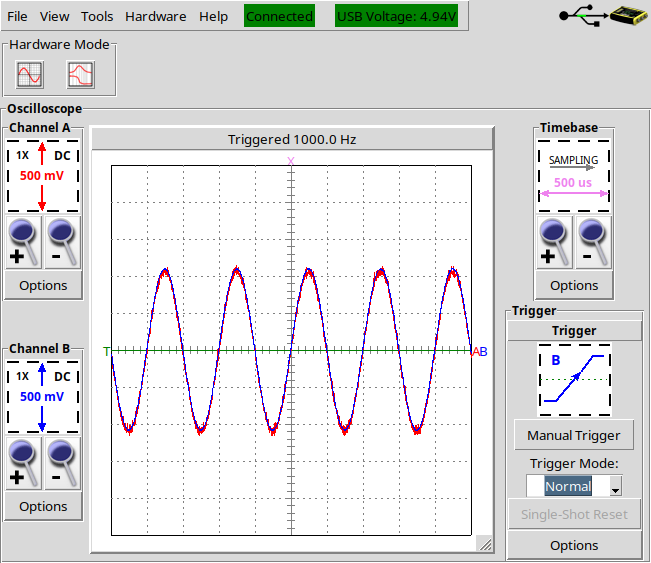
AD620 amplifier module
Modifying a common AD620-based voltage amplifier makes a unity-gain buffer with adjustable offset.
Popular AD620-based amplifier modules, shown in figure 1, are available from Protosupplies.com. These modules ship with two potentiometers: one for gain (R6), and one for offset (R7). I need unity gain for some microphone testing, which requires removing potentiometer R6.
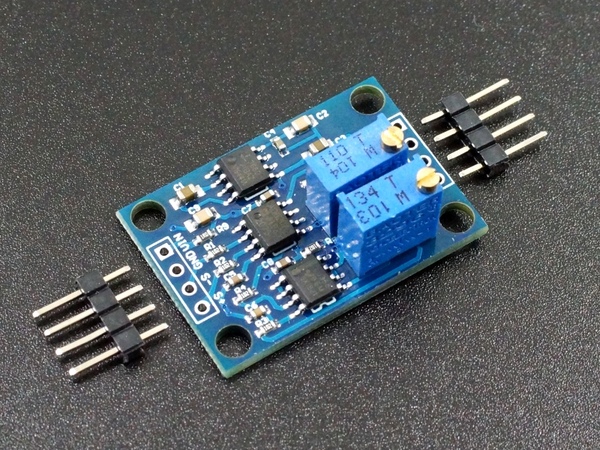
Modifying for unity gain
Figure 2 shows how I'll use this module with unity gain. The R7 potentiometer is closer to the center of the board than R6 and can be removed with a soldering iron. I'll use a single-ended voltage source, so I jumper Vin- to Gnd. The 10Ω resistor in series with the voltage output protects against capacitive loading from the oscilloscope input.
Note that my source is bipolar — making output on both sides of 0V, and that I only have a +5V power supply. The amplifier module generates its own negative voltage rail to handle negative voltage inputs.
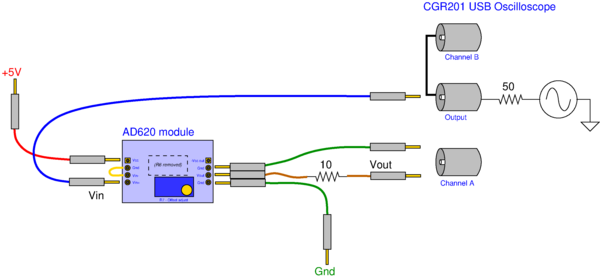
Unity gain test
Figure 3 shows the breadboard setup for the unity-gain test. Notice the breadboard power supply from Axiometa. This is the very convenient BrodBoost-C available from Crowd Supply.
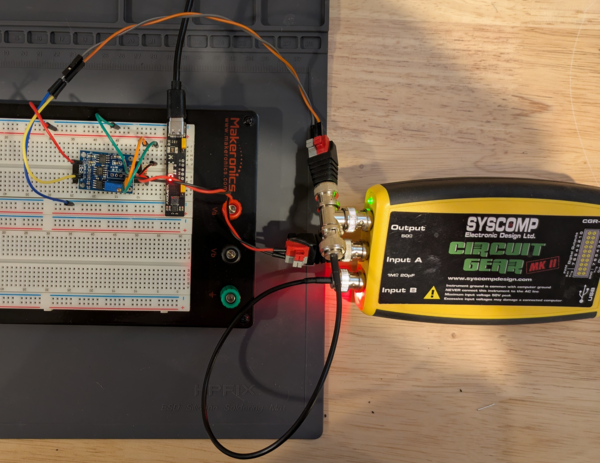
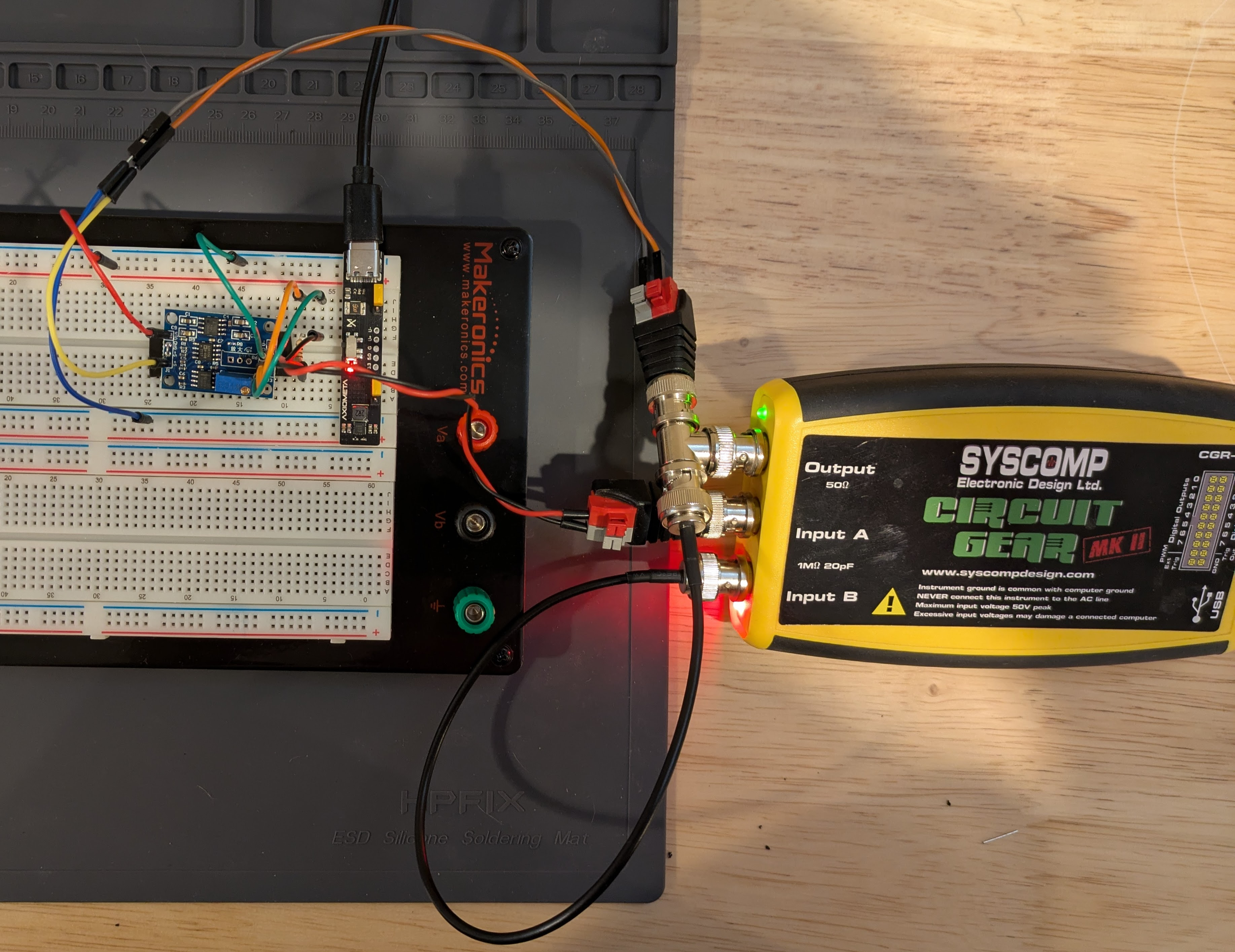
Figure 4 shows input and output voltage traces. These lie nicely on top of each other. Offset is adjustable with R7. The Protosupply.com product page has an excellent description of the amplifier circuit.